Basic Export Terms Every Exporter Should Know
Master the essential export terminology — from FOB and CIF to LC, Bill of Lading, Incoterms, and HS Codes. A must-read glossary for new and experienced exporters.
24 March 2026
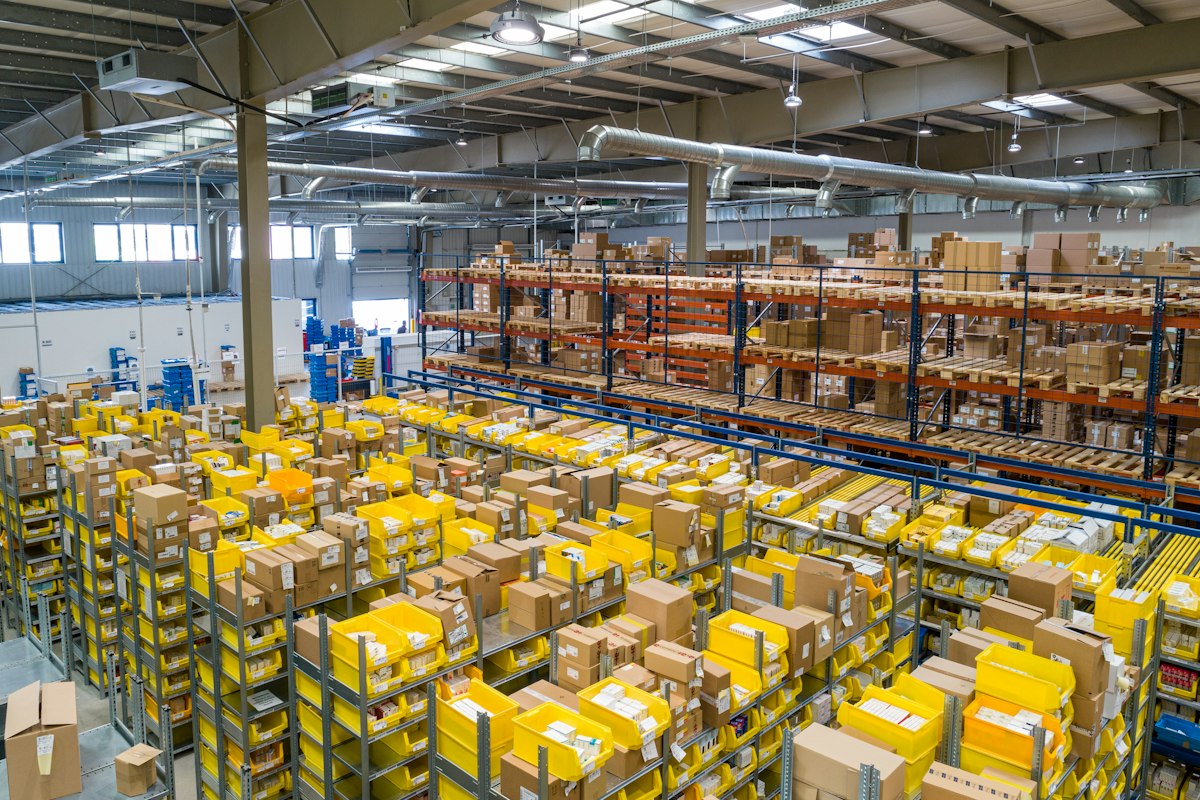
Whether you are shipping your first container or scaling an established export business, understanding export terminology is the foundation of everything. Miscommunicating a trade term can delay shipments, cause unexpected costs, or even invalidate a payment.
This guide covers the 20 most important export terms every exporter must know — explained in plain English with real-world context.
1. Incoterms (International Commercial Terms)
Incoterms are a set of 11 standardized trade terms published by the International Chamber of Commerce (ICC) that define responsibilities, costs, and risk transfer between buyers and sellers in international trade. The current version is Incoterms 2020.
They answer three critical questions: Who pays for freight? Who buys insurance? When does risk transfer from seller to buyer?
Example: If you agree on FOB Chittagong, you (the seller) are responsible until goods are loaded onto the vessel at Chittagong port. After that, the buyer bears all risk and cost.
2. FOB – Free on Board
FOB is one of the most commonly used Incoterms in export trade, especially in garments, textiles, and manufacturing. Under FOB, the seller delivers the goods on board the vessel nominated by the buyer at the named port of shipment. Risk transfers to the buyer once the goods are on the ship.
- Seller pays: domestic transport, export customs clearance, loading charges
- Buyer pays: ocean freight, insurance, import customs, destination charges
Common ports: FOB Chittagong, FOB Shanghai, FOB Mumbai
3. CIF – Cost, Insurance, and Freight
Under CIF, the seller pays the cost of goods, freight, and insurance to deliver goods to the buyer's named port of destination. However, risk transfers to the buyer once goods are loaded on the vessel — just like FOB. The seller only buys minimum insurance coverage.
- Seller pays: production, export clearance, freight, insurance
- Buyer pays: import duties, customs clearance, local delivery
Tip: CIF gives the buyer less control over shipping. Many sophisticated buyers prefer FOB so they can choose their own freight forwarder.
4. EXW – Ex Works
EXW places maximum obligation on the buyer. The seller makes goods available at their premises (factory or warehouse), and the buyer handles everything from that point — loading, transport, export clearance, and all freight.
EXW is common in domestic transactions or when the buyer has strong logistics infrastructure. As an exporter, EXW means minimum responsibility and minimum control over the shipment.
5. DDP – Delivered Duty Paid
DDP is the opposite of EXW — maximum obligation on the seller. The seller delivers goods to the buyer's named place, clears customs in the import country, and pays all duties and taxes. DDP is often used in e-commerce (Amazon FBA shipments) where the seller handles the full delivery experience.
6. LC – Letter of Credit
A Letter of Credit (LC) is a payment instrument issued by the buyer's bank, guaranteeing that the seller will receive payment once they present specific shipping documents that comply with the LC terms. It is the most secure payment method in international trade.
Key LC types:
- Irrevocable LC: Cannot be changed without consent of all parties — the safest for exporters
- Confirmed LC: A second bank (usually in the exporter's country) adds its guarantee
- At-sight LC: Payment upon presentation of documents
- Usance/Deferred LC: Payment after a fixed period (e.g., 60 days after shipment)
Common LC documents required: Commercial Invoice, Packing List, Bill of Lading, Certificate of Origin, and inspection certificates.
7. Bill of Lading (B/L)
The Bill of Lading is arguably the most important document in sea freight export. It is a legal contract between the shipper and the shipping line that serves three functions:
- Receipt of goods — confirms the carrier received the goods in stated condition
- Contract of carriage — outlines terms of shipment
- Document of title — whoever holds the original B/L can claim the goods
Types:
- Original B/L: Negotiable document, required to release cargo
- Sea Waybill: Non-negotiable, cargo released to named consignee without original document
- Telex Release: Digital surrender of original B/L rights
8. HS Code (Harmonized System Code)
The HS Code is a 6-digit (or more) international product classification number used by customs authorities worldwide to identify goods. It determines import duties, trade statistics, and eligibility for trade preferences.
Example: HS Code 6203.42 = Men's or boys' trousers of cotton
Getting your HS Code wrong can result in wrong duty calculation, shipment delays, or penalties. Always verify with your country's customs authority or a licensed customs broker.
9. Commercial Invoice
The Commercial Invoice is the primary document in any export transaction. It is issued by the seller and contains:
- Seller and buyer details
- Description, quantity, and unit price of goods
- Total value and currency
- Payment terms and Incoterm
- HS Code
- Country of origin
Customs authorities in both the exporting and importing country use the commercial invoice to assess duties and verify shipment details.
10. Packing List
The Packing List details exactly what is in each carton or package of a shipment. It includes:
- Number of packages/cartons
- Contents of each package
- Gross weight and net weight
- Dimensions of each package
While not a document of title, the packing list is essential for customs inspection, warehouse receiving, and resolving disputes about shortage or damage.
11. Certificate of Origin (COO)
A Certificate of Origin is an official document that certifies the country where the goods were produced. It is critical for:
- Claiming preferential tariff rates under trade agreements (e.g., GSP, SAFTA, APTA)
- Meeting import country requirements
- Anti-dumping investigations
Types: Non-preferential COO (general use) and Preferential COO (for duty benefits, e.g., Form A for GSP).
12. GSP – Generalized System of Preferences
GSP is a trade program where developed countries (USA, EU, Japan, etc.) grant reduced or zero import duties to products from developing countries. Bangladesh, for example, enjoys duty-free access to the EU under EBA (Everything But Arms) as a Least Developed Country (LDC).
To benefit from GSP, exporters must obtain a preferential Certificate of Origin and meet rules of origin requirements.
13. Freight Forwarder
A Freight Forwarder is a third-party logistics company that arranges the transportation of goods on behalf of exporters. They handle:
- Booking cargo space with shipping lines or airlines
- Preparing and processing export documents
- Customs clearance (or coordination with customs brokers)
- Inland transport coordination
- Cargo insurance
For new exporters, a reliable freight forwarder is one of the most valuable business partners.
14. Customs Clearance
Customs Clearance is the process of obtaining permission from customs authorities to export or import goods. For exports, this typically involves submitting the export declaration, commercial invoice, packing list, and any required permits or certificates.
In Bangladesh, export clearance is done through the ASYCUDA World system at Chittagong port.
15. Pro Forma Invoice
A Pro Forma Invoice is a preliminary invoice sent to a buyer before a confirmed order. It outlines:
- Product description and specifications
- Quoted price and Incoterm
- Payment terms
- Estimated delivery timeline
- Validity period of the quote
Buyers often use the Pro Forma Invoice to apply for an LC or import license. It is NOT a demand for payment — that comes with the Commercial Invoice after shipment.
16. TEU – Twenty-foot Equivalent Unit
A TEU is the standard unit of measurement for container capacity. One TEU = one 20-foot shipping container. A 40-foot container = 2 TEUs.
- 20-foot container (20'): ~25-28 CBM capacity, ~18,000 kg payload
- 40-foot container (40'): ~55-58 CBM capacity, ~26,000 kg payload
- 40-foot High Cube (40'HC): ~65-68 CBM capacity — most common for garments
17. Port of Loading (POL) and Port of Discharge (POD)
- Port of Loading (POL): The port where goods are loaded onto the vessel (origin port)
- Port of Discharge (POD): The port where goods are unloaded from the vessel (destination port)
These are always specified on the Bill of Lading and in the LC. Example: POL = Chittagong, POD = Hamburg.
18. Lead Time
Lead time in export refers to the total time from order confirmation to shipment readiness (or sometimes to delivery). It typically includes:
- Raw material procurement time
- Production time
- Quality inspection time
- Packaging and loading time
Accurate lead time communication prevents shipment delays and keeps buyer relationships strong.
19. MOQ – Minimum Order Quantity
MOQ is the smallest quantity a supplier is willing to produce or sell in a single order. MOQs exist because of setup costs, raw material minimums, and production efficiency.
When negotiating with buyers, clearly state your MOQ per style, color, or SKU to avoid confusion and unprofitable small orders.
20. T/T – Telegraphic Transfer (Bank Wire)
T/T (Telegraphic Transfer) is the most common payment method in international trade for trusted buyer-seller relationships. The buyer transfers payment directly to the exporter's bank account.
Common T/T structures:
- 30% T/T advance + 70% T/T before shipment — common for new buyers
- 30% advance + 70% against B/L copy — for established buyers
- 100% T/T in advance — for small orders or new buyers with no history
Bonus: Key Acronyms Quick Reference
| Acronym | Full Form | What It Means |
|---|---|---|
| B/L | Bill of Lading | Shipping document & title of goods |
| COO | Certificate of Origin | Proves where goods were made |
| EXW | Ex Works | Buyer picks up from seller's factory |
| FOB | Free on Board | Seller loads, buyer handles rest |
| CIF | Cost, Insurance, Freight | Seller pays freight & insurance |
| DDP | Delivered Duty Paid | Seller handles full delivery |
| GSP | Generalized System of Preferences | Reduced duty trade benefit |
| HS | Harmonized System | Product classification code |
| LC | Letter of Credit | Bank-guaranteed payment |
| MOQ | Minimum Order Quantity | Smallest order a supplier accepts |
| POD | Port of Discharge | Destination port |
| POL | Port of Loading | Origin port |
| T/T | Telegraphic Transfer | Bank wire payment |
| TEU | Twenty-foot Equivalent Unit | Container size measure |
Frequently Asked Questions
What is the difference between FOB and CIF?
Under FOB, the buyer pays freight and insurance. Under CIF, the seller pays for both. Risk transfers at the same point (when goods are on the vessel), but CIF costs the seller more. Most experienced buyers prefer FOB for control over logistics.
Do I need an export license to export from Bangladesh?
Most goods can be exported without a special license, but you need an Export Registration Certificate (ERC) issued by the Chief Controller of Imports and Exports (CCI&E). Some goods (e.g., chemicals, food, pharmaceuticals) require additional permits.
What is the safest payment method for exporters?
An irrevocable, confirmed Letter of Credit (LC) is the safest. T/T in advance is also safe but depends on buyer trust. Avoid open account terms (where you ship first and get paid later) until you have a well-established relationship with the buyer.
What happens if my HS Code is wrong?
Using the wrong HS Code can result in incorrect duty assessment, customs holds, fines, or shipment seizure. Always verify with a customs authority or licensed customs broker before filing your export declaration.
Conclusion
Mastering export terminology is not just academic — these terms appear in every Purchase Order, LC, contract, and shipping document you will handle. Misunderstanding even one term (like confusing FOB risk transfer) can cost you thousands of dollars.
Bookmark this glossary, share it with your export team, and revisit it whenever you encounter an unfamiliar term in a buyer's contract.
Ready to find international buyers for your products? Start your free ExportScout account and connect with verified global buyers today.